
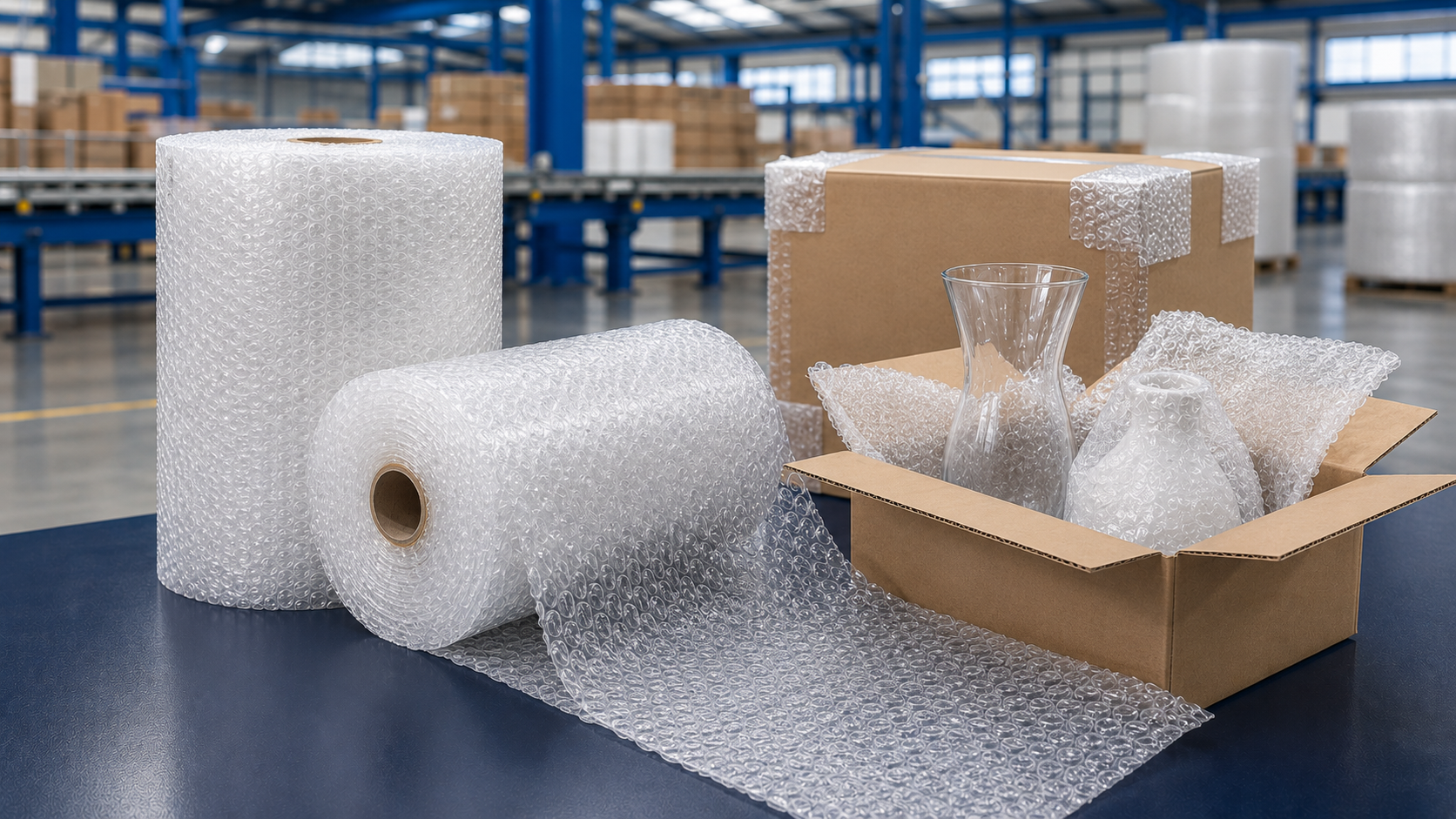
What Is Bubble Wrap? Types and Uses
No matter how firmly a glass item or electronic device sits inside a box, it can be damaged by the smallest impact if it is not wrapped correctly. This is where bubble wrap comes in: a protective packaging material that removes that risk by forming an air cushion around your products. In this guide, you will learn what bubble wrap is, its types, its features, and how to choose the right kind for your operation.
What Is Bubble Wrap?
Bubble wrap is a protective packaging product made of air bubbles placed at regular intervals between two layers of low-density polyethylene (LDPE). These bubbles protect products against mechanical impact much like an air cushion.
Thanks to its soft, flexible structure, it easily wraps items of different sizes and shapes. While the air bubbles absorb impact, its waterproof structure also protects the product against moisture and dust. With these qualities, bubble wrap is an essential solution in both individual and industrial packaging.
Types of Bubble Wrap
Bubble wrap is produced in different types based on the intended use and product type:
- Standard bubble wrap: The multi-purpose base model, ideal for everyday packaging needs and fragile products.
- Small-bubble wrap: With its thin, flexible structure, it suits the packaging of small, light products.
- Large-bubble wrap: Thicker and more durable, it provides extra protection for heavy, large items as well as furniture and appliances.
- Anti-static bubble wrap: A type that prevents static electricity and is usually pink; it is used for electronic devices and circuit boards.
- Laminated and foil bubble wrap: The laminated model provides waterproofing with an extra layer, while the foil model is used for heat reflection in insulation and construction.
The product can also be supplied in roll, cut-sheet, or bubble envelope/pouch form. Pouch types come in various sizes from 10×10 cm up to 200×200 cm.
Features and Advantages
The main advantages that make bubble wrap so widespread are:
- High impact protection: The air-filled bubbles absorb external impacts and shocks, preventing product damage.
- Light weight: It protects without adding extra weight, lowering transport costs.
- Water and moisture resistance: Its polyethylene structure protects the product against damp and dust.
- Economy: With its affordable cost and bulk-purchase advantage, it is an accessible solution for many businesses.
- Versatility: It adapts to every product with options in size, thickness, and bubble size.
Applications
Bubble wrap is preferred in nearly every sector that ships fragile and sensitive products:
- Electronics: Safe transport of computers, televisions, medical devices, and circuit boards (anti-static model).
- Glass and ceramics: Protecting glassware, porcelain, and decorative objects against scratches and breakage.
- Furniture and appliances: Protecting items like refrigerators, washing machines, mirrors, and frames from impact.
- E-commerce and cargo: Ensuring products arrive undamaged in online order shipments.
- Industry: Protecting machine parts and spare parts against vibration.
- Textiles and export: Safe packaging of designer apparel and long-distance shipments.
For example, in furniture exports on long-haul transport, bubble wrap forms an almost mandatory layer of protection by preventing deformation and scratching on the product surface.
How to Choose the Right Bubble Wrap
When selecting the best bubble wrap for your operation, weigh these criteria:
- Product sensitivity: For fragile and valuable products, choose the large-bubble model that provides higher protection.
- Weight and size: Small bubbles suit light products, while large-bubble wrap suits heavy and bulky items.
- Product type: Choose anti-static for electronics and a laminated model for outdoor or humid environments.
- Usage form: Rolls are more practical for high-volume packing, while bubble envelopes/pouches suit single shipments.
- Sustainability: To reduce environmental impact, consider products containing recyclable material.
By determining the right type and bubble size, you can lower your packaging costs and improve your product safety at the same time. Ekas Plastik Ambalaj offers the solution best suited to your operation with its bubble wrap options in various bubble sizes and forms. To identify the best model for your product, explore our products and send us your quote request.