
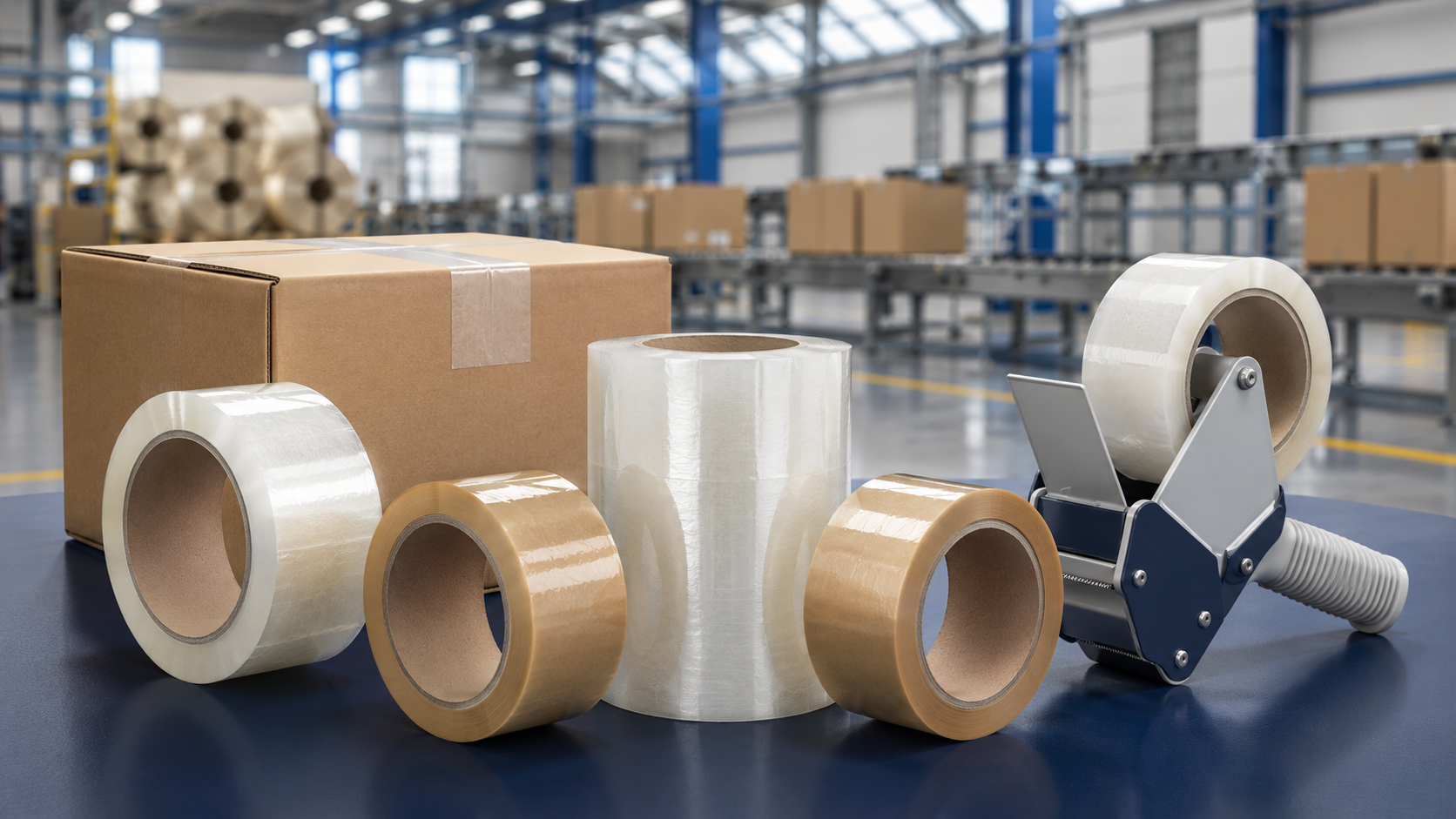
What Is Packing Tape? Types and How to Choose
When a parcel pops open in transit, the culprit is usually not the box but a poorly chosen packing tape. Small and ordinary as it looks, this product is one of the most critical links in shipment security. In this guide, you will learn what packing tape is, its types by adhesive, its size and printing options, and how to choose the right tape for your operation.
What Is Packing Tape?
Packing tape is a high-adhesion fastener designed to seal, join, and safely ship cardboard boxes and packaging. It is usually made by applying an acrylic, hot melt, or solvent-based adhesive onto a polypropylene (PP) or PVC carrier film.
Packing tape is a pressure-sensitive product, meaning its self-adhesive property is activated once pressed onto the surface. A properly applied tape therefore prevents the box from opening on its own and keeps the contents secure throughout transit.
Types of Packing Tape
While packing tapes look alike from the outside, the real difference lies in the adhesive type. The three main types are:
- Hot melt packing tape: The most common type. It bonds fast and aggressively, tears easily by hand, and typically works between -18°C and +40°C. It is ideal for overfilled and recycled cartons, though its resistance to very high heat and long-term UV is limited.
- Acrylic (water-based) packing tape: Economical and resistant to UV, moisture, and temperature changes; it does not yellow over time. Because it is hard to tear by hand, it is mostly used with a tape machine and preferred for heavy loads.
- Solvent packing tape: Stands out for its high adhesion. It keeps its performance in cold storage and humid environments, has a long shelf life, and leaves no odor behind.
Sizes, Colors, and Printing Options
Packing tapes are produced in various widths and lengths. Width is usually 24, 45, 48, and 100 mm, while length mostly ranges from 60 to 100 meters. Other sizes can be supplied as needed.
On the color side, the most common options are transparent and tan (brown) tape. Transparent tape suits standard packaging with its crystal look, while tan tape is preferred for an integrated appearance on cardboard.
Printed (branded) packing tape offers a distinct advantage. Tape printed with a company logo or warnings like “fragile” or “handle with care” keeps your brand visible throughout shipment and adds a tamper-evident layer that shows whether the box has been opened.
Applications
Packing tape is a standard material almost anywhere packaging happens:
- Logistics and cargo: Fast, secure sealing of boxes.
- E-commerce: Time savings in high-volume order packing.
- Food industry: Hygienic sealing of boxes and crates.
- Textiles and export: Preserving box integrity over long-distance shipment.
- Office and home: Moving, repairs, and everyday packing.
For example, in an e-commerce warehouse where thousands of boxes are taped daily, acrylic tape compatible with an automatic tape machine provides both speed and consistency.
How to Choose the Right Packing Tape
When selecting the best packing tape for your operation, weigh these criteria:
- Ambient temperature: Solvent tape suits cold storage or winter conditions, while hot melt tape suits standard environments.
- Surface type: Hot melt holds better on recycled or dusty cartons, while acrylic holds better on surfaces like metal and glass.
- Application method: Choose hot melt for hand taping and acrylic for high volume with an automatic machine.
- Load weight: For heavy boxes, use high-strength tape and reinforce with strapping when needed.
- Branding needs: Consider printed packing tape for a corporate look and added security.
By determining the right adhesive type and size, you can lower your packaging costs and improve your shipment security at the same time. Ekas Plastik Ambalaj offers the solution best suited to your operation with its acrylic, hot melt, and printed packing tape options. To identify the best tape for your shipments, explore our products and send us your quote request.