
What Is a Woven PP Sack? Types and Uses
Flour, sugar, feed, fertilizer, or pulses: behind almost every dry product moved in bulk stands a durable woven PP sack. Despite their light build, these sacks offer high carrying strength and, when chosen correctly, protect both your product and your brand visibility. In this guide, you will learn what a woven sack is, the types available, their technical features, and how to choose the right model for your operation.
What Is a Woven Sack?
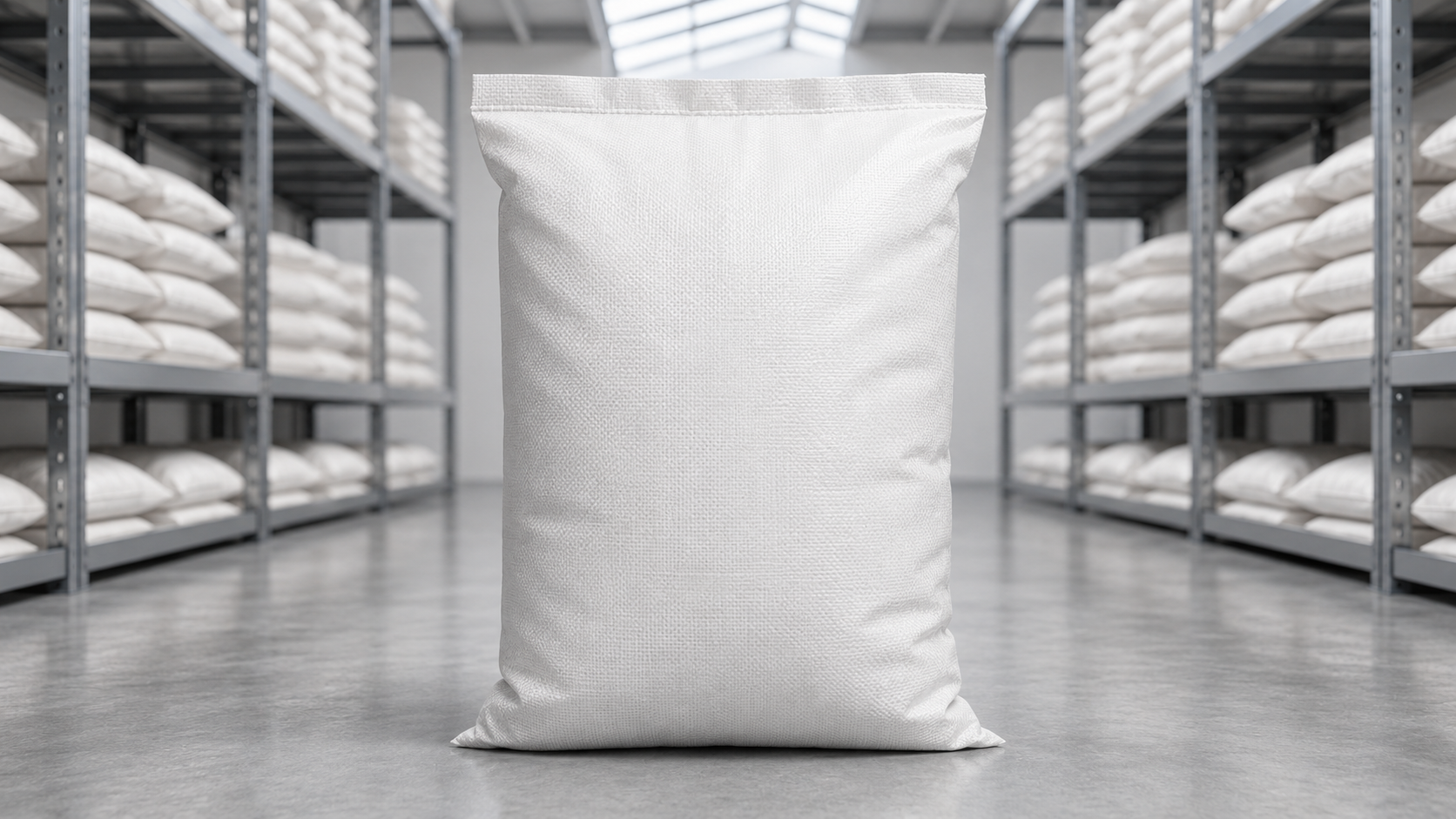
A woven sack is a durable, high-capacity packaging material made mostly by weaving polypropylene (PP) tapes. Production consists of extrusion, where the raw material is melted and drawn into tapes, weaving, where those tapes are turned into fabric, followed by lamination, printing, cutting, and stitching.
The key difference between a woven sack and a big bag is scale and capacity. A woven sack is generally used for unit packaging in the 25-50 kg range, whereas a big bag is a much larger FIBC that carries 200-2,000 kg of bulk load.
Types of Woven Sacks
Woven sacks are produced in different types based on the product to be carried and the presentation needed:
- Standard woven sack: The unlaminated, economical, multi-purpose base model.
- Laminated sack: A model coated with lamination to make it water-, moisture-, and dust-proof.
- BOPP (photo-printed) sack: Printed in up to 6 vivid colors, ideal for retail presentation of pulses.
- Vented / transparent sack: Used for products that need air circulation or need their contents to be visible.
- Gusseted and PE-lined sack: An expanding gusset for bulky products, or an inner liner for moisture-sensitive goods.
Technical Features and Production Options
A woven sack’s performance is largely determined by its weight (GSM) and weave density. Laminated sacks are usually produced between 40 gsm and 300 gsm, while the lamination layer ranges from 20 to 50 gsm.
For sacks used outdoors, UV stabilization matters; with this additive, sacks can be made sun-resistant for anywhere from 6 months to 3 years. Widths generally fall in the 25-90 cm range, and length and color can be customized to the product.
The sack mouth is closed with an overlock or chain stitch, and cutting can be done hot or cold. On the printing side, flexo printing allows up to 6 colors across both faces for logos and product details. This turns a woven sack into not just packaging but also a marketing tool.
Applications
Woven sacks are preferred in nearly every sector that moves dry, bulk products:
- Food and agriculture: Packaging of flour, sugar, salt, grain, feed, and seed.
- Pulses: BOPP-printed retail presentation for products such as rice, chickpeas, and lentils.
- Chemicals: Transport of chemicals in granule, powder, and pellet form.
- Fertilizer: Laminated models for moisture-sensitive products.
- Construction: Packaging of cement, plaster, lime, and sand.
- Industry and recycling: Industrial goods and recycling bags.
Woven sacks play a critical role in Turkey’s agricultural exports. For example, in batches of pulses shipped from Gaziantep, UV-stabilized and printed sacks both protect the product and make the brand stand out on the shelf.
How to Choose the Right Woven Sack
When selecting the best woven sack for your operation, weigh these criteria:
- Product type: Choose a laminated sack for moisture-sensitive goods and a vented or mesh model for products that need airflow.
- Weight and durability: Choose a higher-gsm, tightly woven sack for heavy products.
- Presentation needs: BOPP-printed models suit retail sales, while standard printed models suit bulk shipment.
- Usage environment: UV-stabilized sacks are essential if the goods will be stored outdoors.
- Closure and discharge: Set the mouth stitch (overlock/chain) and, if needed, a PE inner liner according to your requirements.
By determining the right weight, weave, and lamination, you can lower your packaging costs and improve your product safety at the same time. Ekas Plastik Ambalaj offers durable, print-ready, and standards-compliant solutions with its range of woven sacks produced for the needs of different sectors. To identify the best model for your product, explore our products and send us your quote request.