
What Is Stretch Film? Types and How to Choose
No matter how carefully a pallet is stacked, a single sharp turn can put an entire shipment at risk if the load is not properly secured. This is where stretch film comes in: a low-cost, highly effective packaging solution that removes that risk from the modern supply chain. In this guide, you will learn what stretch film is, the different types available, how to pick the right micron, and how to choose the best film for your operation.
What Is Stretch Film?
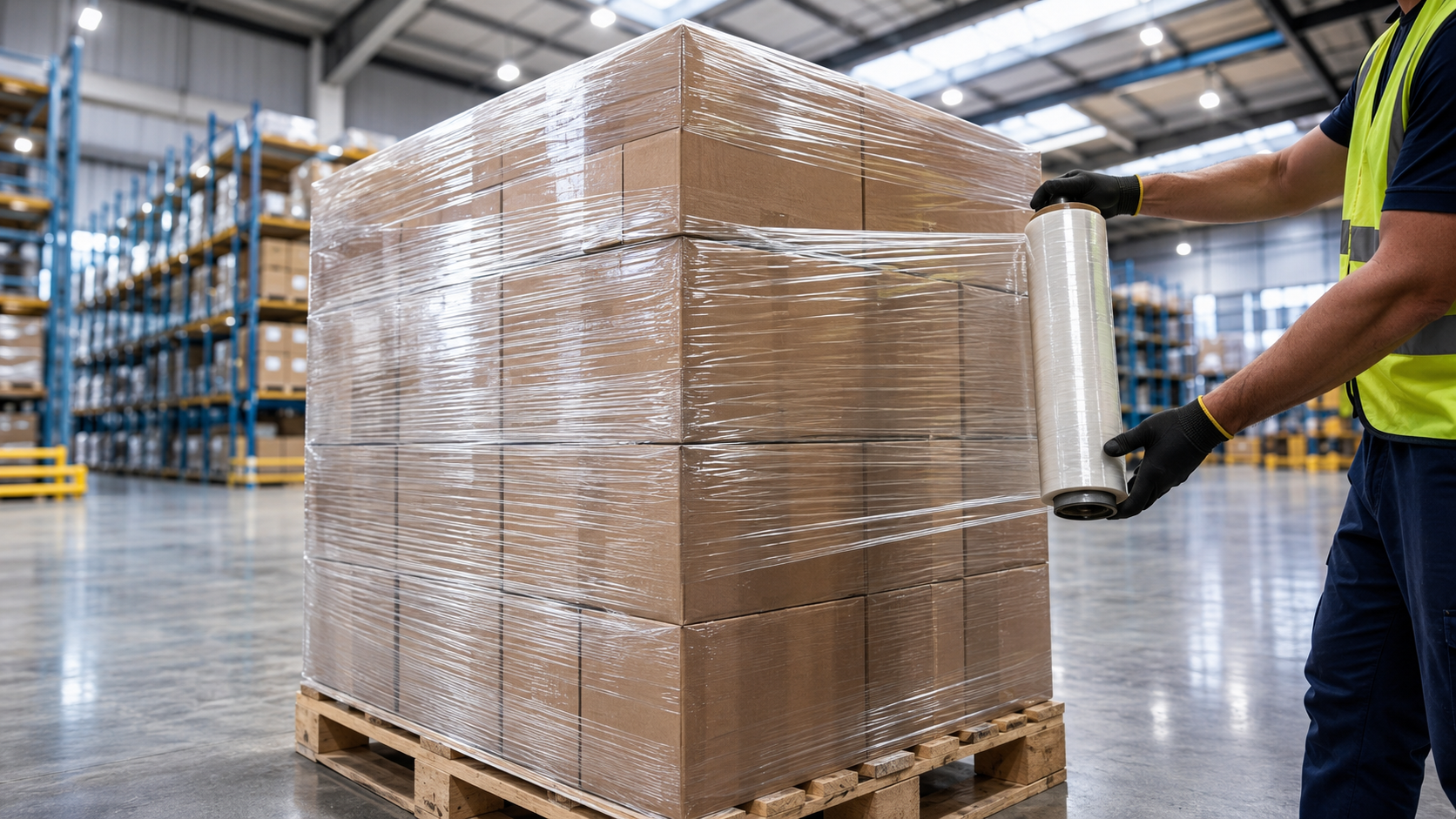
Stretch film is a flexible, transparent, and self-adhesive plastic packaging material that wraps products tightly and holds them together. It is usually made from LLDPE (Linear Low-Density Polyethylene). This structure gives the film both a high stretch capacity and strong resistance to tearing.
The film’s defining feature is that it grips the load more firmly the more it is stretched. On automatic machines, stretch film can be stretched up to 400 percent. As a result, a small amount of film wraps a large surface securely, and your costs drop.
Types of Stretch Film
Stretch films are produced in different types based on the wrapping method and load type:
- Hand (manual) stretch film: Comes in lighter rolls and is applied by hand or with a dispenser. It suits low-volume operations that wrap only a few pallets per day.
- Machine stretch film: Longer, heavier rolls used in automatic and semi-automatic pallet wrappers. It delivers speed and film savings in high-volume operations.
- Pre-stretch film: A thinner but high-performance film that is stretched in advance during production. It wraps more pallets with less film, saving on both cost and waste.
- Transparent and opaque film: Choose transparent film when barcodes and labels must stay readable; choose black or colored film to hide products or sort them by color code.
Choosing Micron and Size
The durability of stretch film is expressed in microns. While films range from 12 to 35 microns on the market, the most widely used values are 17 and 23 microns. Household food wraps use much thinner values, such as 8 microns.
Standard pallet stretch films are usually sold in rolls that are 50 cm wide and 300 meters long. Low-quality films cannot maintain their strength across the -40°C to +80°C range, which is why raw material quality is critical.
When choosing the right micron, keep this balance in mind: too much material raises costs, while insufficient packaging causes damage and returns. Thin film is enough for light loads, whereas heavy, unstable, or sharp-edged loads require a higher micron.
Stretch Film Uses
Stretch film is indispensable in nearly every sector that palletizes goods:
- Logistics and transport: Preparing pallet loads safely for shipment and preventing them from shifting during transit.
- Storage: Protecting long-stored goods from dust, moisture, and other external factors.
- Food industry: Securing boxes and crates on the pallet.
- Automotive, appliances, and furniture: Preserving the integrity of fragile and sharp-edged products.
- Construction materials: Bundling heavy pallets such as bricks and tiles.
- E-commerce: Preparing bulk-order pallets for dispatch.
Stretch film plays an especially critical role in exports. For example, on a shipment leaving a Turkish port for Europe, keeping the goods on the pallet from shifting over a long journey depends on the right wrapping technique and film quality.
How to Choose the Right Stretch Film
When selecting the best film for your operation, weigh these criteria:
- Usage volume: If you wrap fewer than 30 pallets a day, hand film and a dispenser are more economical; above that, machine film wins.
- Load characteristics: Set the micron based on weight, edge sharpness, and stability.
- Stretch ratio: A higher stretch ratio lets you wrap more pallets with less film.
- Transparency needs: Choose transparent film for label readability and opaque film for confidentiality.
- Roll weight: Check the net film weight to calculate the true cost.
By determining the right type and micron, you can lower your packaging costs and maximize your shipment security at the same time. Ekas Plastik Ambalaj offers the solution best suited to your operation with its hand and machine stretch films, produced on the principle of full length and consistent roll weight. To keep your loads secure, explore our products and send us your quote request.